Strong preference for SMAs among hedge fund allocators has dropped from 25% to just 11% over the past six months, according to the Hedgeweek®-AIMA H1 2026 Allocator Survey of over 100 global institutions. Meanwhile, strong preference for commingled funds has nearly doubled from 19% to 35%, marking the first significant reversal in a structural trend that has defined the industry for nearly a decade.
[caption id="attachment_99064" align="alignnone" width="2484"]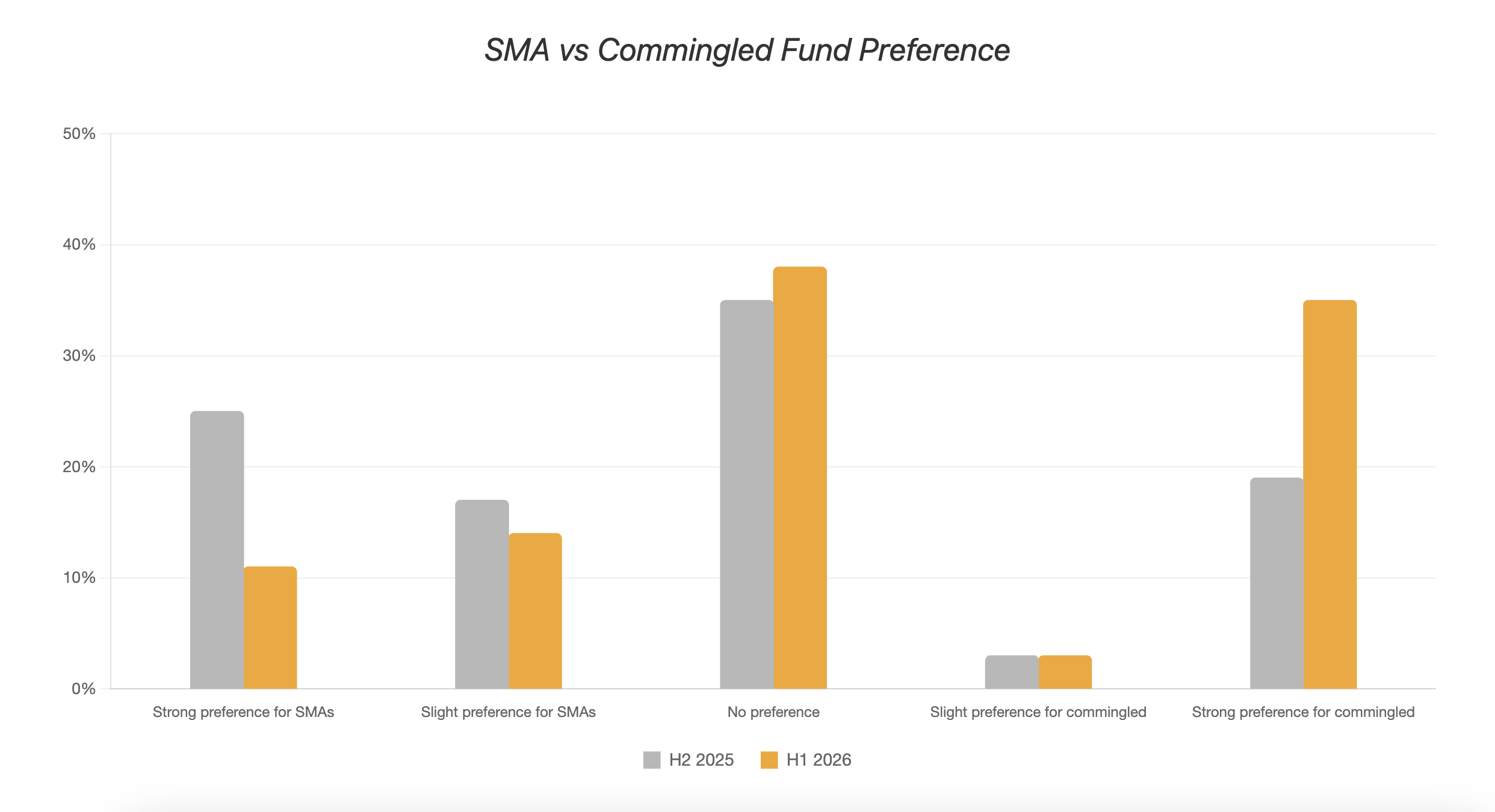 SMA Demand vs Commingled Funds in 2025 and 2026[/caption]
The shift reflects growing concerns about operational complexity outweighing the theoretical benefits of SMAs, particularly among mid-sized allocators without dedicated infrastructure teams.
"As a small team, we try to limit our operational burden," explains a mid-sized endowment allocator. "Shifting away from SMAs into commingled funds helps reduce operational complexity." A large state pension plan allocator puts it more bluntly: "The risk management and operational complexity of SMAs for a small allocation to hedge funds is too great versus the weighted return impact. What do you do with all the data? What if you miss a risk issue because you didn't review all the data you received - what is the liability risk to your career?" The concern extends beyond simple administration. The pension allocator notes that even large plans are reconsidering: "Some of the larger plans are finding that with SMAs they still can't shift the risk profile up enough to generate the returns they need, so many who can do SMAs with dedicated teams are throwing in the towel." The rise of multi-strategy platforms has also reduced SMA appeal, as these funds are "supposed to be the better risk managers of the aggregate portfolio," the allocator adds. However, the picture reveals stark bifurcation. UAE and Singapore allocators maintain near-universal SMA preference, driven by sophisticated operational capabilities and regulatory requirements.
[caption id="attachment_99065" align="alignnone" width="580"]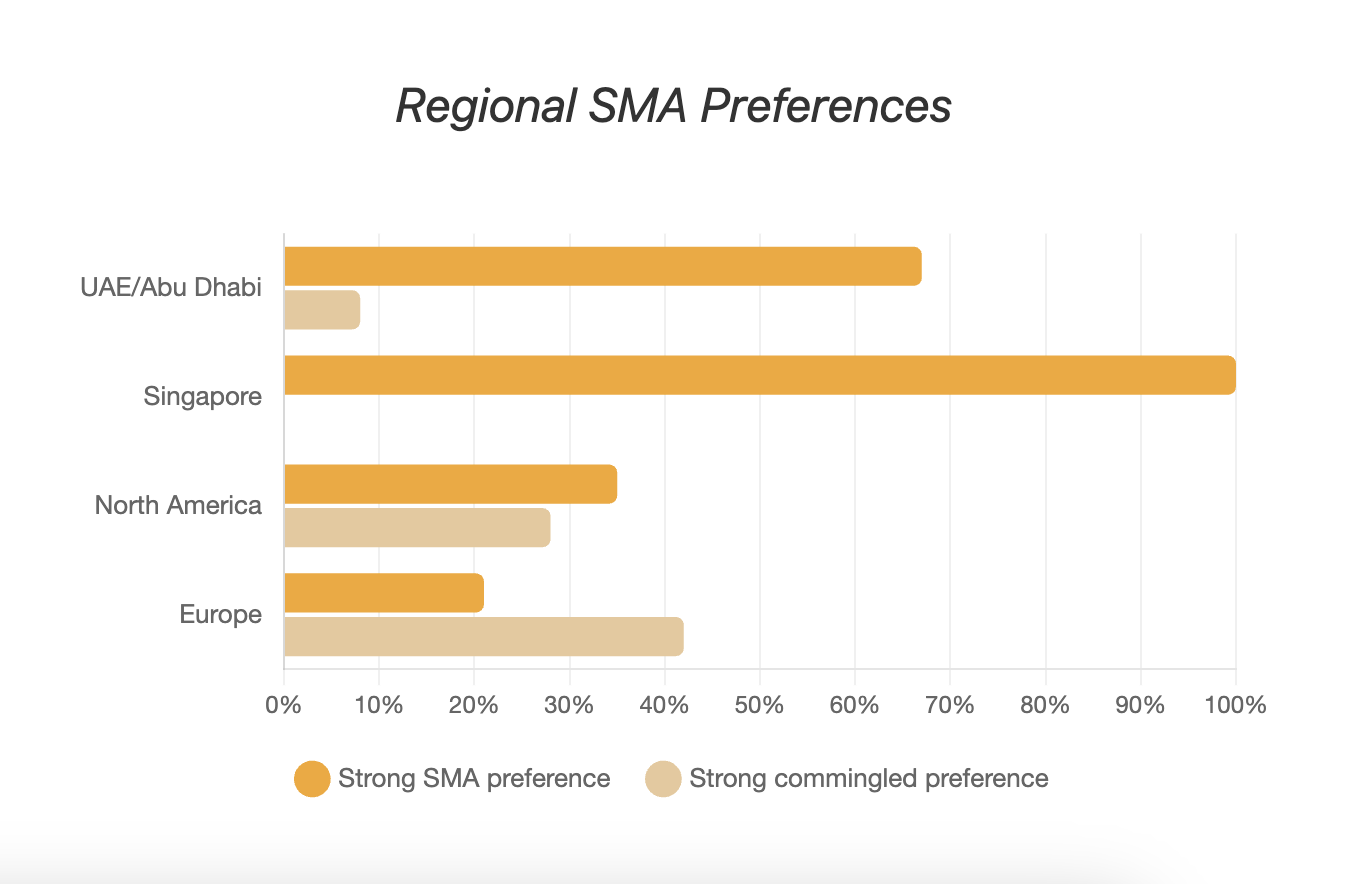 Regional SMA Preferences[/caption]
Tom Kehoe, managing director at AIMA, was surprised by the headline finding. "The allocators I speak to are top state pension plans and sovereign wealth funds. I don't hear them talk about commingled funds anymore."
He explains the divide: "As you go down the food chain from sovereign wealth funds at the very top to a single family office running a couple of hundred million at the bottom, they might prefer commingled."
The data suggests SMAs remain essential for accessing the largest institutional mandates, but the operational burden may be pricing out mid-sized allocators who drove recent growth.
The question facing the industry is whether this represents peak SMA, or simply a pause as smaller institutions digest the complexities of a structure designed for much larger players.
About the data: The above data is part of a comprehensive Allocator Sentiment Report published in January 2026. Register now to download a free copy of the full report here.
Davidson Kempner's research led approach
Partner and Head of Research at Davidson Kemper, Suzanne Gibbons, on building a global research function, embedding AI, and capitalising on…
More
Brevan Howard Digital's CIO on what it actually takes to run digital assets
Chris Rayner-Cook is clear about what running digital assets actually asks of a manager, and it is less about the instruments than most…
More
Where deep modelling meets mortgage credit
Greg Valli has been part of two of the three decades of Ellington Management Group. During that period, the firm has enjoyed a rapid rise…
More
