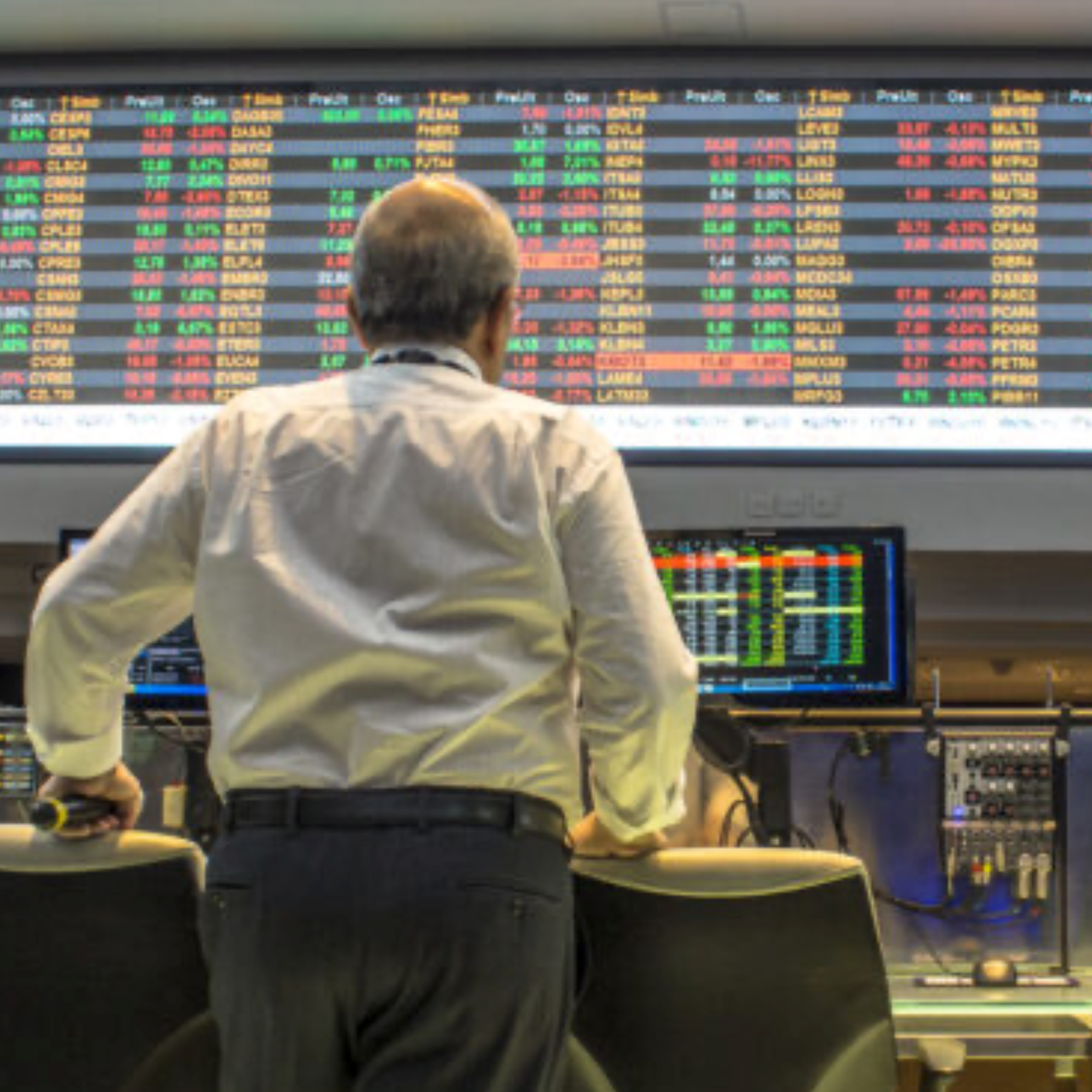
Singapore Exchange’s (SGX) securities and derivatives activities increased in June, compared to a year earlier. For the last 12 months (July 2012 to June 2013) stock market capitalisation increased 13 per cent to SGD954bn.
Total bond fundraising increased 45 per cent to SGD196 bn. Of this number, SGD4.5bn was denominated in Chinese renminbi.
Securities daily average value (SDAV) increased 11 per cent to SGD1.5bn, while derivatives daily average volume (DDAV) increased 34 per cent to 412,558 contracts, and the volume of OTC commodities cleared increased 79 per cent to 446,892 contracts and volume of iron ore swaps cleared tripled to
Diapason Commodities Management has launched its new Smart Beta commodity investment product –Virtuoso – which is being unveiled to a series of institutional investors and consultants in the US and Europe from July 2013.
Virtuoso is a fully customisable investment platform designed to generate sustainable alpha above commodity benchmark investment, including the Diapason Commodity Index (DCI) or any other investable commodity index – for example the widely-used Dow Jones-UBS Commodity Index.
The platform targets performance of four to six per cent above the chosen benchmark depending on portfolio constraints and is designed for pension funds, endowments, insurance firms and other institutional
MarketAxess, the operator of an electronic trading platform for fixed income securities and the provider of market data and post-trade services for the global fixed income markets, has reported total monthly trading volume for June 2013 of USD68.6bn.
The total consists of USD43.1bn in US high-grade volume, USD18.8bn in other credit volume, and USD6.7bn in liquid products volume.
The Credit Suisse Liquid Alternative Beta (LAB) Index was down 1.07 per cent in June, according to Dr Jordan Drachman, head of alternative beta strategies at Credit Suisse.
The managed futures strategy was the strongest performer for the month, finishing up 0.69 per cent in June, and up 6.15 per cent year-to-date.
The Long/Short Liquid Index was the worst performer finishing down 1.55 per cent.
BNY Mellon has received licence approval from the Securities and Futures Commission (SFC) for its new dedicated Hong Kong-based subsidiary to establish a separately managed accounts business.
The new subsidiary will introduce a separately managed accounts platform, which will be the first of its kind in Asia, and is expected to be launched later this year.
It is being specifically designed with Asian investors in mind and will be offered to a select group of private banks and other leading wealth management providers to enable them to better serve their high-net-worth individual clients.
"Separately managed accounts are
The US Commodity Futures Trading Commission (CFTC) has approved an order for ICE Trade Vault, a provisionally registered swap data repository, to drop its foreign exchange asset class.
This approval is pursuant to section 21 of the Commodity Exchange Act and part 49 of the Commission’s regulations.
The CFTC had granted provisional registration to ICE Trade Vault as a swap data repository on 27 June 2012 to accept swap data for the interest rate, credit, foreign exchange, and other commodity asset classes.
The Commission previously granted an order to remove the interest rate asset class from the
By Olivier Sciales, Chevalier & Sciales – Luxembourg’s financial regulator, the Financial Sector Supervisory Authority (CSSF), has published a series of Frequently Asked Questions (FAQs) regarding the draft legislation that will implement the European Union’s Alternative Investment Fund Managers Directive into national law and the European Commission’s implementing regulation.
The CSSF has decided to publish the FAQs to provide managers with greater clarity on the impact of the directive, and especially provisions regarding the transitional period of a year up to July 22, 2014, even though Luxembourg’s Chamber of Deputies has not yet voted the draft legislation into law.
The
Indus Valley Partners’ IVP RAPTOR (Regulatory Analytics Portfolio Transparency Operational Reporting) has been implemented by 25 clients since its October 2012 launch.
With a combined client AUM of USD200bn, IVP RAPTOR has enabled some of the world’s largest alternative asset managers to meet their global regulatory reporting needs.
IVP RAPTOR includes coverage for all major regulatory filings required by US-based alternative asset managers, including Form PF, 13F/D/G, CPO-PQR, OPERA and upcoming AIFM for Europe.
“Regulators and investors are continuously demanding greater transparency and more detailed reporting from alternative asset managers. In this heightened environment, IVP has
The international derivatives exchanges of Eurex Group achieved an average daily volume of 10.8 million contracts in June (June 2012: 11.0 million).
Of those, almost 8.1 million were Eurex Exchange contracts (June 2012: 8.5 million), and 2.7 million contracts (June 2012: 2.5 million) were traded at the US-based International Securities Exchange (ISE). In total, 162.6 million contracts were traded at Eurex Exchange and 54.3 million at ISE.
Eurex Exchange recorded 68.3 million equity index derivatives contracts (June 2012: 86.6 million). The single largest contract was the future on the Euro Stoxx 50 Index with 33.6 million contracts. The
The so-called US Federal Reserve “taper tantrum,” fear of a credit crunch in China, and hot spots of unrest dotting the globe contributed to a sense of market panic that swept both stocks and bonds in June. One thing’s for certain, the calendar may have shifted to summer, but volatility hasn’t taken a vacation. As you might expect, contrarian investor Dr Michael Hasenstab (pictured), co-director of Franklin Templeton’s International Bond Department, says investors with cool enough heads to look past short-term market panics can find opportunities while those who can’t stand the heat may miss out…
Investors need to separate out