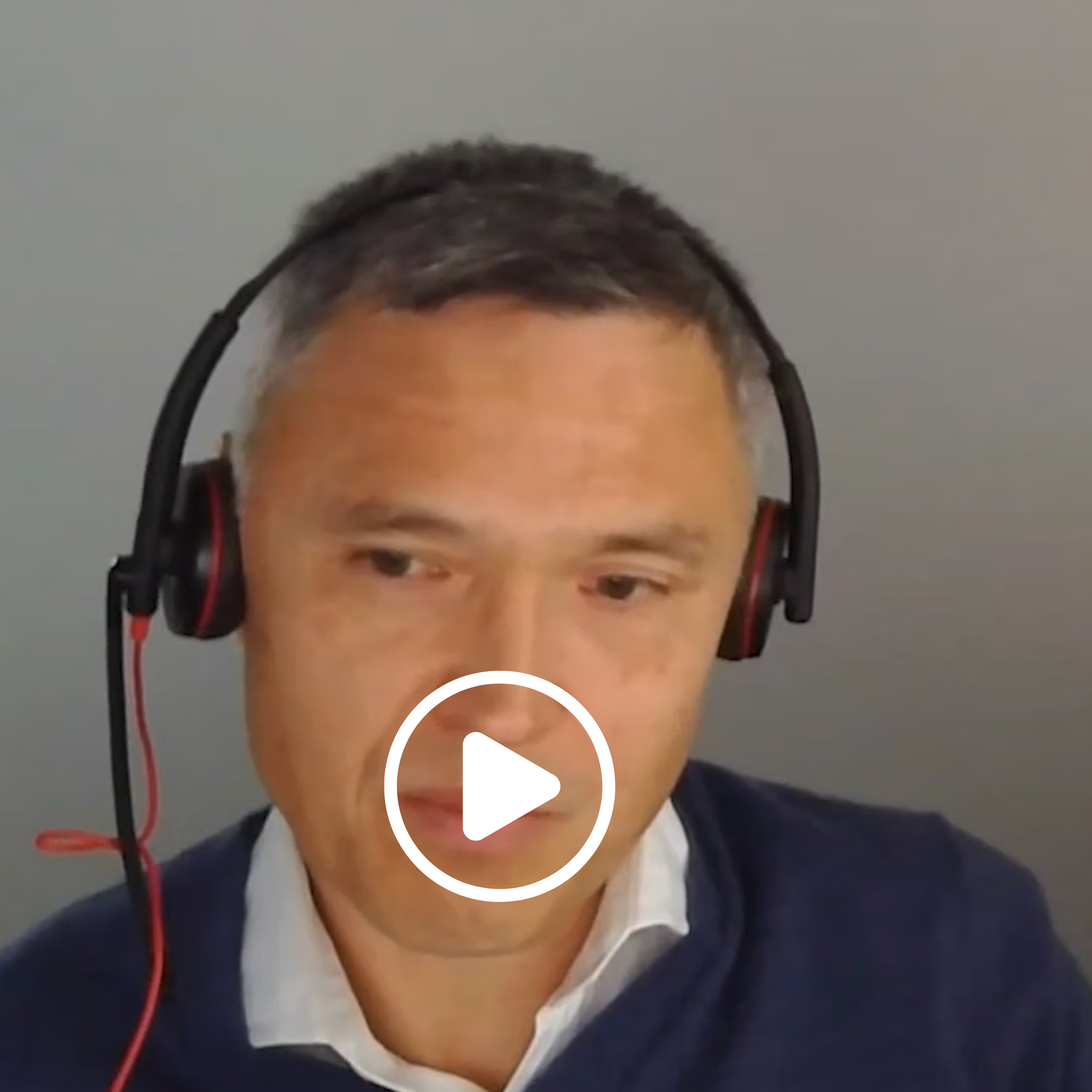
Dublin-based alternative investment manager, Abbey Capital, has had an interesting year, thanks to investor interest returning to the managed futures space. Hedgeweek took the opportunity last month to speak with Abbey Capital’s Director of Research, Mick Swift (pictured), and Marketing Manager, Katherine Lucey, to gauge their assessment of 2010.
With its range of multi-manager funds covering both the CTA/managed futures and global macro space, the USD2.9billion firm has grown, since it was established in 2000, to become one of the world’s largest independent allocators. “We continue to specialise in managed futures, FX and global macro allocations” explains Swift, who goes on to reveal that, as a globally focused business, the US is a very significant market. “North America remains a major source of our assets, in excess of 50 per cent,” says Swift.
Abbey Capital Ltd. is registered as a Commodity Trading Advisor (CTA), a Commodity Pool Operator (CPO) with the CFTC in the US, as well as being a member of the National Futures Association (NFA) and is regulated by the Central Bank of Ireland. Abbey Capital is also registered as an Investment Advisor with the SEC. This regulatory framework is an attractive option to institutional investors like pension funds looking to diversify their portfolios. “The track record of the business and the size of our funds help to open us up to pension funds,” says Lucey. “We have been delighted to see strong inflows from pension funds globally in 2010,” says Swift.
Currently, Abbey Capital runs two multimanager funds. “The Alternative fund, Abbey Capital’s flagship fund, currently allocates to 23 managers globally and provides daily liquidity to investors,” says Swift. “We also have a Macro fund which is a more specialised global macro fund and currently allocates to 10 managers.” This latter fund began offering investors weekly liquidity last July and has a volatility target of 8 per cent. When asked whether any new funds could be rolled out in 2011, Swift explains that there are none currently in the pipeline: “We are looking at a few ideas but nothing definite at this point.”
With respect to fund performance, Swift says that 2010 has been dominated by trend-following strategies, with fixed income, commodities and FX being the biggest gainers. “The Alternative fund is up 11.7 per cent for 2010,” explains Swift. “Asset growth this year has been strong with inflows higher than they were in 2009. We’ve seen and continue to see a lot of interest in the managed futures sector.” The fund, which also offers daily liquidity, currently has USD2.6billion in AUM. There’s no denying managed futures, as an asset class, have attracted inflows this year. A recent report published by BarclayHedge in conjunction with TrimTabs Investment Research found that CTAs attracted USD7.9billion of the USD16billion in new assets for October, whilst Asia ex-Japan managed futures were the best performing strategy in November, generating returns of +6.42 per cent to leave them +13.40 per cent YTD. The Macro fund has not fared quite as well in 2010. YTD returns are +2 per cent with Swift admitting that it’s been tough “due to risk aversion”.
Swift goes on to say that with respect to the Alternative fund they’re slightly off where they wanted to be as the “fund’s medium to long-term objective is 12 per cent to 15 per cent p.a.”. “The first six months were flat but you have to face what the market puts in front of you,” says Swift. “The May flash crash and Japanese Central Bank intervention (to halt appreciation of the yen) were unexpected incidents. August through October delivered strong returns before we saw some give back in November on sovereign debt issues. Strong performance continued into year end in December.” Although highly diversified, the main drivers of the fund’s gains this year have come from fixed income, FX and commodity markets. Swift confirms that 2009 was a difficult year after a strong 2008, causing the Alternative fund to lose 3 per cent because “managers got caught on trend reversals”.
Of the 23 managers within the Alternative fund, the majority are trend followers (50-60 per cent target allocation). The remaining managers consist of non-trend followers such as; Global Macro, Value, Counter Trend and Short-term Systematic managers. The majority of managers are systematic with Global Macro providing some discretionary trading.
The strongest feature of managed futures is the uncorrelated returns they can offer, with daily liquidity helping to reduce portfolio risk and providing downside protection when market dislocations arise during periods of volatility. They are one of the few asset classes to offer a negative correlation to equity bear markets and a small positive correlation to equity bull markets. Exchange traded prices are known intra-day and at close of business, with margin accounts debited and credited at the end of each day.
This highly transparent approach is benefiting CTAs like Abbey Capital as institutional investors become evermore diligent in their asset allocation. “As mentioned, the US is our biggest market but momentum has been seen across the board globally,” says Swift, who readily acknowledges the growing importance of Asia. So much so that Japan, Hong Kong and Singapore have become important markets. Abbey Capital doesn’t actually have an on-the-ground presence in Asia, choosing instead to service its Asian clients from Dublin, with Swift and his colleagues making frequent visits to the region. “We’re seeing a very sophisticated investor base in Asia seeking absolute returns and diversification in a low interest rate environment,” adds Swift.
“All of these investors are looking at ways to diversify and managed futures themselves are beginning to diversify away from traditional hedge funds as a distinct asset class,” explains Lucey. “The security of the fund’s investment structure, supported by managed accounts, presents Asian and global institutional investors with an attractive option.”
Wealth platforms and a number of third-party distributors help bring Abbey Capital’s funds to market. Key investors typically include pension funds, family offices, endowments and private banks.
One of the reasons behind Abbey Capital’s success, in Swift’s opinion, is the strong relationships they’ve forged with CTA managers over the last decade: “There are about 1,000 CTAs globally and we look at all of them to identify those with the potential to join our fund,” says Swift. “Getting a strong sense of who the manager is, what they could add to the portfolio – these are important considerations.” One of the key questions asked of potential managers is: ‘Do they have experience running managed accounts in regulated markets?’
Risk management is conducted using Abbey Capital’s proprietary system for risk and research capabilities. Called Action, this is a tiered system that uses both quantitative and qualitative parameters to assess managers daily. “As an allocator we’re very much a low turnover organisation due to our thorough due diligence – less than five per cent turnover p.a. over the lifecycle of both funds,” explains Swift, adding that the due diligence process typically takes three months. This daily analysis of the underlying managed accounts allows Abbey Capital to monitor managers effectively. “Transparency itself comes from the industry,” explains Swift.
So what are the firm’s expectations heading into 2011? Swift begins his answer by pointing out that since ’08 investors’ attitudes towards managed futures have changed. “Managed futures are truly bi-directional and performed extremely well in 2008, which encouraged investors and caused them to look at managed futures seriously again. There are no gates or side pockets, liquidity is very much available so I believe managed futures are very much open for business.”
Swift says that the firm’s general view for 2011 is to keep building on “the consistent robust approach we’ve already established”. He adds that there could be a number of potential inflection points leading to trends such as rising inflation or oil breaking through USD100 a barrel: “Having a managed futures allocation can reduce an overall portfolio’s volatility. We’re in the business of managing risk and allocating to managers in the fund who can do this effectively. We’re certainly very optimistic on managed futures for 2011 and beyond,” concludes Swift.