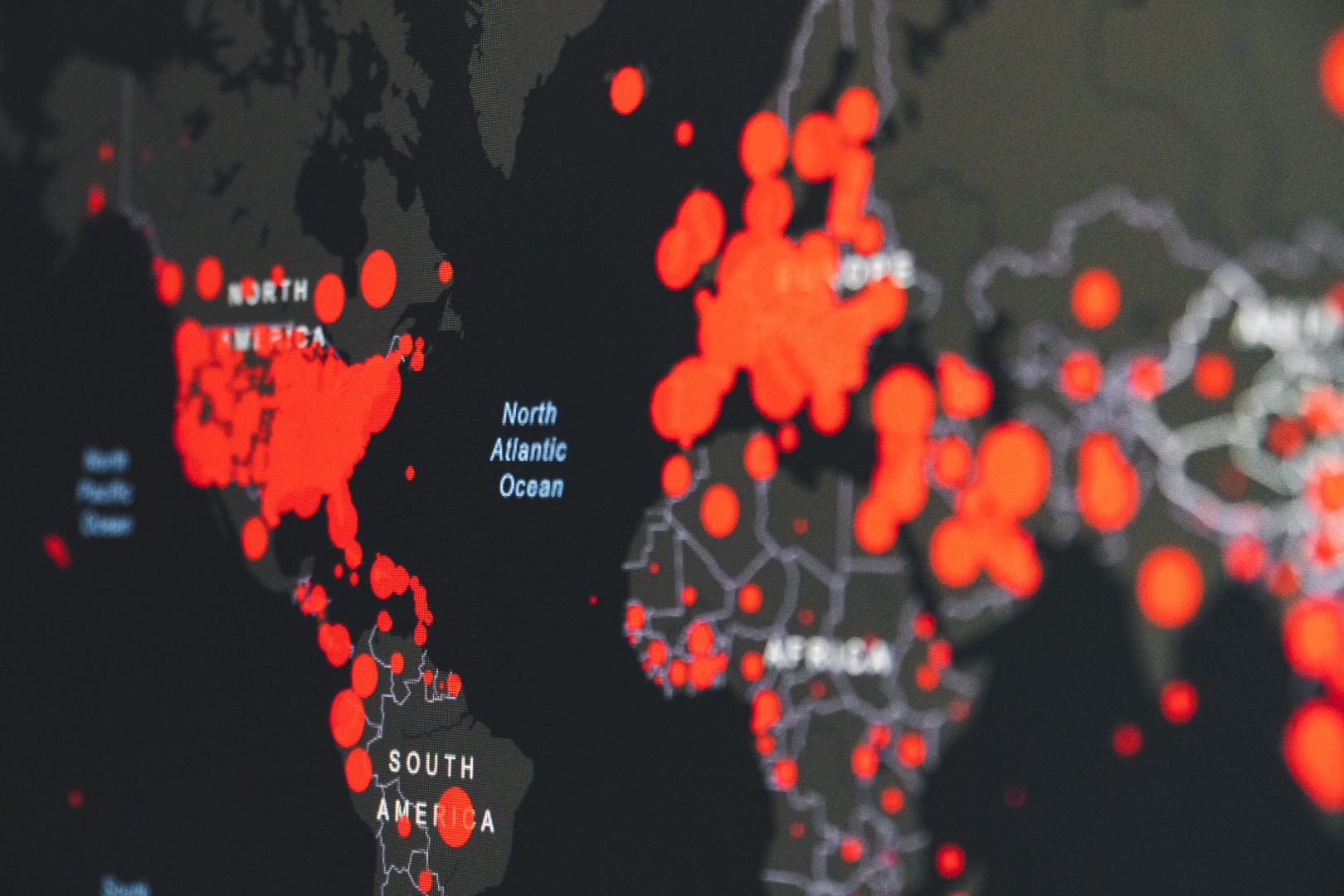
Hedge funds trading emerging markets strategies face major dispersion in their assets, as the impact of Covid-19 – and the resulting government responses – diverges sharply across different regions and countries.
New analysis by Lyxor Asset Management this week pointed to “uneven recovery prospects” across different EM countries and markets following the pandemic, stemming from various factors including differing regional responses to the crisis, business cycles, government support for economies, and reliance on oil markets, among other things.
Emerging markets-focused hedge funds lost 8.5 per cent last month, according to Lyxor stats, as the dramatic sell-off in developed markets spread
Last month, the impact of coronavirus caused stock markets to plummet. This led to a huge spike in volatility, with the VIX Index hitting a high of 82.69 on 16 March, benefiting macro strategies (according to the latest Q1 performance figures) as well as statistical arbitrage strategies like New Jersey-based Blueshift Asset Management.
Hedge fund managers were down 4.40 per cent in March, outperforming the MSCI AC World Index IMI (Local) by 9.59 per cent during the month – a level of outperformance unseen since October 2008. Long volatility-focused strategies, CTA/managed futures and AI hedge funds top the Q1 2020 league table, while equity long-biased hedge funds nurse losses of close to 20 per cent.
On an asset-weighted basis, hedge funds were down 6.49 per cent in March, as captured by the Mizuho Eurekahedge Hedge Fund Index (USD). The index is currently down 8.95 per cent year-to-date.
As of Q1 2020, the global hedge
Starting in April, Solactive is to make a wide range of its benchmark indices will be made available on C8 Technologies’ platform. Different kinds of investors, such as asset owners, asset managers, and hedge funds can all implement them in their portfolios.
The C* Technologies platform enables asset owners to invest directly in sophisticated strategies developed by index providers.
With C8 Technologies’ approach, investors gain the opportunity to customise their portfolio without bearing the requirement to allocate their capital to external parties. The platform’s approach accounts for a greater degree of transparency and easier customisation of investors’ portfolios compared to the
The Wilshire Liquid Alternative Index, which provides a representative baseline for how the broad liquid alternative investment category performs, returned -6.33 per cent in March, underperforming the -5.88 per cent monthly return of the HFRX Global Hedge Fund Index. The Wilshire Liquid Alternative Index family aims to deliver precise market measures for the performance of diversified liquid alternative investment strategies implemented through mutual fund structures, backed by a proprietary classification methodology.
“Financial markets experienced extreme volatility as governments and global policy makers grappled with both a global pandemic as well as a supply and demand shock in oil,” says Jason
Shorter-term managed futures strategies are gearing up for further episodic spikes in volatility in the coming months, leading to more opportunities to capitalise on continued market unpredictability.
Trend followers largely withstood March’s market turmoil, notching up generally positive returns as other hedge fund strategies fell by the wayside amid growing Covid-19 pandemic fears.
But while CTA performance on the whole was somewhat mixed – the SocGen CTA Index closed the month at 0.09 per cent as medium-term managers’ gains in bonds and currencies was offset by equity losses – it was shorter-term strategies who soared amid the carnage.
Short-term CTAs
Dispersion reigned among different hedge fund strategies during a turbulent March, with global macro and trend-following funds posting positive returns while equity-focused managers tumbled sharply. A deepening of Covid-19 fears across the global economy sparked unprecedented losses in markets and dramatically reversed last year’s buoyant risk-on environment.
CME Group achieved record international average daily volume (ADV) of 7.2 million contracts in Q1 2020, up 57 per cent year on year, and surpassing the previous quarterly record of 5.3 million contracts traded during the second quarter of 2019. This record, reflecting all trading done outside North America, was driven largely by growth in Equity and Interest Rate products, up 152 per cent and 46 per cent respectively.
In Q1 2020, Europe, Middle East and Africa ADV hit a record 5.4 million contracts, up 54 per cent from Q1 2019. This was due to a strong performance in Equity and
RISE Wealth Technologies announces best ever monthly performance for its flagship systematic strategy: Volatility Special Opportunities Program (VSOP)While major financial markets have dropped, RISE Wealth Technologies, a Munich-based AI investment technology firm, has reported the best ever monthly performance for its flagship Volatility Special Opportunities Program (VSOP) strategy.
Up in March by 23.21 per cent and up by 18.83 per cent for the year, VSOP entails a systematic multi-strategy approach in the S&P 500 index volatility market with a real-money track record dating back to July 2016. Specifically, it is composed of a Balanced Portfolio consisting of S&P 500
The European Energy Exchange (EEX) has successfully completed the 100 per cent acquisition of UK based software company, KB Tech Ltd (KB Tech). Co-Founded in 2005 by David Briggs and Paul Kemp, KB Tech specialises in providing data management services and products to the trading, pension and financial markets. The Company’s propriety software delivers a range of modular, connected services providing functions for managing real-time data within and around the trading, price delivery and transactional environments.
Speaking on the acquisition, Dr Tobias Paulun, Chief Strategy Officer at EEX, says: “KB Tech and EEX Group have been working together in close partnership