PARTNER CONTENT
What are the three most compelling attributes of your business and product offerings that have resonated with investors in the past year?
- We believe the rigorous, risk-focused framework in which we allocate capital seeking to enforce diversification, penalize expected shortfall, and emphasize capital efficiency has resonated with investors. Relatedly, our return attribution across various products has historically shown a diverse set of return drivers. While not all return drivers are positive, investors have appreciated that this is the shape of an innovative but risk-managed investment process: success is not driven by one idea, but many, and less successful sub-strategies are reduced or replaced.
- Our firmwide emphasis on idiosyncratic returns instead of highly commoditized traditional quant factors has resonated well with allocators. Particularly the fact that we strive to remain fairly neutral to core quant factors, especially in the more efficient portion of the universe, means that our products can help diversify investor portfolios rather than amplify existing sources of risk.
- Our research team’s emphasis on innovation has been well received. Investors are well aware that the space is highly competitive, and that continuous innovation is table-stakes. Showing investors the evolution of our investment process through its constantly evolving risk attribution helps them understand how focused we are on staying competitive.
In what specific ways did your investment approach deliver value to clients amid the market volatility and economic challenges of 2024-25?
In an environment of high market volatility and heightened economic uncertainty, our systematic investment process has sought to deliver attractive results across geographies and market caps by focusing on its core competency, which is true peer-relative stock selection. Maintaining risk limits on key vectors of macroeconomic risk like sector and country, as well as limits on generic factor momentum, means that our firm’s models have been more insulated than many from the whipsaws of the macroeconomic environment. We believe it’s in these times that we find markets may reward rationality and well-informed investment theses over “growth-at-any-cost” stories. This has historically been a very productive environment for our investment approach.
How do you expect institutional and private wealth investor sentiment toward hedge fund allocations to evolve across US markets in the coming year?
We expect that the appetite for systematic equity market neutral will remain strong. As a category it has demonstrated a lot of durability during recent periods of market volatility. While uncertainty about recession risk, tariffs, rates, AI hype, etc. remain in the ecosystem, we expect that investors will continue to demand market neutral sources of returns. That said, we expect that a strong track record will not be sufficient to attract investors. For allocators to take notice, managers will have to show meaningful differentiation, especially during periods of market stress.
What structural or operational challenges present the greatest headwinds for US hedge funds today, and what approaches show promise in addressing them?
Quant crowding is a persistent area of focus for our team. Quant funds have largely shifted risk away from the conventional Value/Momentum/Quality complex, but that does not mean that new strategies cannot also become crowded. With crowding comes the risk of alpha decay as well as collateral damage from peer deleveraging or outflows.
Thoughtful study of crowding is helpful. Empirical analysis can suggest which signals are more crowded than others, and the recent availability of anonymized panels of competitor positions and flow data through data vendors can help us understand the positioning and direction of the crowd so we can make informed decisions about allocations.
On top of that, though, we believe the best way to reduce risk associated with crowding is to focus on our core competencies: aggressively searching for new sources of alpha, and disciplined allocation and risk management practices. The specter of crowding really underscores the value of this side of the business.
What do you consider the most notable evolution in the US hedge fund landscape since last year?
Most notable to me is how hedge fund gross notional continues to increase. There are two factors at play here. The first is that assets under management for hedge funds have risen to an all-time high (according to an HFR/Market watch report as of October 2025) – a combination of record fundraising and positive performance. The second is that hedge fund leverage is also at or near historic highs, per data from our prime brokers. In connection to hedge fund flows and leverage is the potential for crowding in certain positions and trading styles. This is an increasingly important dynamic for our team to understand and try to control for within our investment processes.
Important information:
Man Numeric paid a fee for placement of this article.
All investments are subject to market risk, including the possible loss of principal. It is not possible to invest directly in an index. Alternative investments can involve significant additional risks. Past performance is no guarantee of future results.
Opinions expressed are those of the author and may not be shared by all personnel of Man Group plc (‘Man’). These opinions are subject to change without notice, are for information purposes only and do not constitute an offer or invitation to make an investment in any financial instrument or in any product to which the Company and/or its affiliates provides investment advisory or any other financial services. Any organisations, financial instrument or products described in this material are mentioned for reference purposes only which should not be considered a recommendation for their purchase or sale. Neither the Company nor the authors shall be liable to any person for any action taken on the basis of the information provided. Some statements contained in this material concerning goals, strategies, outlook or other non-historical matters may be forward-looking statements and are based on current indicators and expectations. These forward-looking statements speak only as of the date on which they are made, and the Company undertakes no obligation to update or revise any forward-looking statements. These forward-looking statements are subject to risks and uncertainties that may cause actual results to differ materially from those contained in the statements. The Company and/or its affiliates may or may not have a position in any financial instrument mentioned and may or may not be actively trading in any such securities. Any data services and information available from public sources used in the creation of this material are believed to be reliable. However, accuracy is not warranted or guaranteed. The information provided does not take into account the specific objectives or circumstances of any particular investor, or suggest any specific course of action. Investment decisions should be made based on an investor’s objectives and circumstances and in consultation with his or her financial professionals.
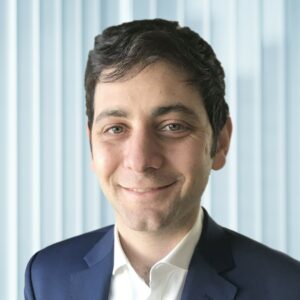 Andrew Kindman, CFA, Senior Portfolio Manager, Man Numeric – Andrew is responsible for the day-to-day management of alternative strategies. He joined Man Group in 2015 as a quantitative developer. Prior to joining Man Numeric, he worked at Santander Holdings and Analysis Group. Andrew received bachelor’s and master’s degrees in economics from Duke University. He is also a CFA® charterholder.