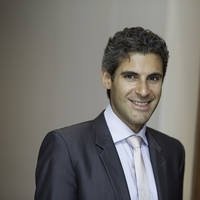
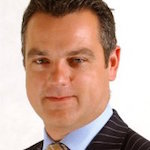
Guernsey offers a flexible choice of business vehicles for structuring funds and associated management and special purpose vehicles. Appleby’s Kate Storey (pictured) takes a closer look at the options.
The types of investment vehicle most often encountered in Guernsey are closed ended or open ended companies and unit trusts and closed ended limited partnerships. Additionally, Guernsey recently introduced its form of limited liability partnership, which has already proved popular as a vehicle to house fund managers and general partners (including of non-Guernsey funds).
TYPES OF VEHICLE
1. Company
The Guernsey limited liability company provides investors with limited liability to the amount
Global macro hedge funds appear to be maintaining a contrarian stance versus the market when it comes to positioning on government rates.
In recent weeks, managers have secured gains by taking long positions in the US and Europe thanks to a global decrease in both short- and long-term rates in fixed income markets. In the middle of July, US 10-year Treasuries were yielding 2.45 per cent, since when they have fallen to 2.16 per cent (at the time of writing). Lower yields arise when economies aren’t firing on all cylinders. Whilst the US economy has shown signs of improvement, the
The Lyxor Hedge Fund Index was up +1.3 per cent in July. 8 out of 12 Lyxor Indices ended the month in positive territory, led by the Lyxor CTA Long Term Index (+4.6 per cent), the Lyxor Global Macro Index (+2.6 per cent), and the Lyxor Variable Bias Index (+2.3 per cent).
A macro month with markets left in the passenger seat driven by highly speculative catalysts. They were bound to follow the unpredictable jolts of the intensifying Greek saga ahead of the July 20th repayment deadline. The eleventh hour deal allowed a recovery in risky asset. 3000 km away from
Hedge funds lost 0.28 per cent in July, according to the Barclay Hedge Fund Index compiled by BarclayHedge. The Index is up 3.05 per cent year to date.
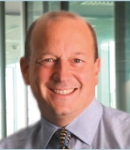
“July was a difficult month for hedge fund managers. The first half was dominated by Grexit fears and the equity sell-off in China. The theme of the second half of the month was recovery from the first half,” says Sol Waksman (pictured), founder and president of BarclayHedge.
Despite the overall loss, 11 of Barclay’s 18 hedge fund indices had gains in July. The Global Macro Index rebounded from a 2.08 per
Markit has agreed to acquire CoreOne Technologies, a provider of regulatory reporting, index management, data management and prime brokerage services to financial institutions.
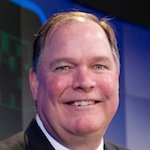
Lance Uggla (pictured), chairman and chief executive officer of Markit, says: “CoreOne is a great fit for Markit. I’m delighted to announce our acquisition of a highly regarded company with a dynamic, entrepreneurial culture similar to Markit. Their services will strengthen our offerings and will allow us to better serve our customers. The transaction is consistent with our longterm strategy to accelerate organic growth through acquisitions, and will enhance our position as a leading provider of financial
Guernsey Finance’s Head of Technical, Sinéad Leddy, discusses a recent KPMG report that showcases Guernsey’s role as a facilitator of global capital flows and the benefits that this brings to Europe.
A new report published by KPMG has revealed the extent to which Guernsey’s funds industry facilitates the flow of capital globally, including GBP105bn of investment in Europe.
The report says that: “Guernsey is used as a conduit to facilitate the raising of capital from investors in different countries and subsequently to facilitate the deployment of this capital into global assets.”
It says that of the GBP155bn of funds under
The gross return of the SS&C GlobeOp Hedge Fund Performance Index for July 2015 measured 0.69 per cent.
Hedge fund flows as measured by the SS&C GlobeOp Capital Movement Index advanced 0.92 per cent in August.
“SS&C GlobeOp’s Capital Movement Index for August showed a gain of 0.92 per cent, which is up sharply from the seasonally impacted -2.96 per cent in July, and also improved on a year-over-year basis from 0.61 per cent in August 2014,” says Bill Stone, Chairman and Chief Executive Officer, SS&C Technologies. “Adjusting for seasonality, the gain in the index was driven by lower
Hedge funds investing predominantly in China suffered steep losses in July, as the HFRI China Index declined -7.7 per cent and the Shanghai Composite Index collapsed, falling over -14 per cent in the month, including a single-day decline of -8.5 per cent.
As a result of these performance losses, total capital invested in Asian hedge funds declined by an estimated USD10 billion in July, this after rising to a record level of USD126.3 billion (784 billion RMB, 15.7 trillion ¥ Japanese Yen) to conclude 1H15, according to the latest HFR Asian Hedge Fund Industry Report, released today by HFR, the
Graham Martin (pictured), managing director of Optima Fund Management, comments on investing in the current market in the UK…
Almost a week on from the Bank of England’s ‘Average Thursday’, it is apparent that the decision to leave UK rates unchanged reflects the fact the inflationary environment is benign.
Though should investors continue to hold their current asset allocations? There are no pressures in price inflation or wage inflation, and there is still capacity in the workforce, as well as an uncertain European economic outlook. Whilst the Bank of England wants to make a symbolic 0.25 per cent rise in
CSC is to acquire Fixnetix, a provider of front-office managed trading solutions in capital markets, enabling CSC to offer capital market clients an expanded range of as-a-service front office capabilities.
the acquisition will also strengthen CSC’s ability to address growing client demand for greater efficiency and innovation in trading, market data, hosting, infrastructure, connectivity and risk management.
Capital market firms of all sizes are facing rapid change amid more stringent customer, regulatory and competitive requirements. With sophisticated systems that are often cost- prohibitive to run in-house, firms are looking to outsource the management and operation of trading systems’ infrastructure