Forward Features Calendar

Find us on

Latest News

Agecroft Partners predicts 2012 will be the best year for net flows into the hedge fund industry since 2007 despite the lacklustre investment performance for the industry in 2011. According to Agecroft’s Don Steinbrugge, this conclusion is based on several dominant and emerging trends the firm has identified through their conversations with more than 300 hedge fund organisations and 2,000 institutional investors during 2011… Some of the trends they have observed include: 1. Improvement of net capital flows across most major hedge fund investor segments  2. Large rotation of assets between managers based on relative performance and changes in demand for strategies
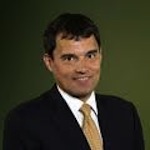
CBRE Clarion Securities today announced the launch of the CBRE Clarion Long/Short Fund (the Fund) effective 3 January, 2012. The new Fund will draw upon CBRE Clarion’s many years of experience managing private long/short hedge funds since 2000. T Ritson Ferguson (pictured), CEO of CBRE Clarion Securities and co-portfolio manager of the Fund, says: "In this fund, we are delighted to offer our original hedge fund strategy, which has delivered attractive total returns during the last 11 years with low volatility due to the strategy’s historical ability to provide downside protection in difficult markets." The new Fund will be managed
Singapore Exchange(SGX) posted year-on-year increases in its derivatives, commodities and clearing activities in December while securities trading declined. Securities Turnover fell 41% to SGD17 billion while securities daily average value traded was 36% lower at SGD794 million. Exchange traded fund turnover declined 18% to SGD640 million. Derivatives Volume was up 6% at 5.1 million contracts while daily average volume increased 8% to 241,783 contracts. China A50 futures trading more than doubled to 342,825 contracts, Nifty futures activity rose 28% to 1.1 million contracts and MSCI Taiwan futures volume was 8% up at 1.2 million contracts. Trading of agricultural commodity futures
Hedge funds took in an estimated USD3.6 billion in November, according to BarclayHedge and TrimTabs Investment Research, a welcome reversal after redemptions surged to USD9 billion in October and hit USD2.59 billion in September. Industry assets increased to USD1.71 trillion in November from USD1.67 trillion in October, the first increase after five months of declines. The BarclayHedge Fund Index dipped 0.8% in November after increasing 3.5% in October. That reversal followed five consecutive monthly declines. Despite the increase, hedge fund industry assets stand close to their lowest level since January 2010. “After months of outflows across nearly every hedge fund
December’s good news was that 13 of the 46 markets posted gains, according to data released by S&P Indices. The bad news was that only two made gains for the year, and just barely – Indonesia was up 1.14%, and the Philippines was up 0.21%.  For 2011, S&P Global BMI was down 10.07%, as 21 markets lost at least a fifth of their market value. The devastation was even worse when you excluded the minor US 0.82% decline, which brought the Global Ex-US to a 16.64% loss for the year.  Emerging markets lost 22.92%, which was much worse than the Developed
With over 3,000 listed funds, the Irish Stock Exchange (ISE) is one of the leading stock exchanges worldwide for the listing of investment funds, particularly alternative investment funds including offshore funds and Irish regulated products or QIFs. Managers are listing their funds as a way to reassure potential and existing investors that the fund meets certain standards, both initially and on an ongoing basis, as well as widening the net of potential investors to institutions such as insurance companies and pension funds. Gerry Sugrue (pictured), Listing Manager, Investment Funds at the ISE explains: “So far in 2011 we’ve seen over
Probably the most impressive develop­ment in the investment universe in the last couple of years has been the dramatic growth in US corporate profits. The question is whether these re­cord profits are sustainable because of the continuing crisis in the Eurozone, according to Paul Chew, Head of Investments at US equity specialists Brown Advisory. The impact of the austerity measures on the EU economies could be severe. Nearly 50% of Euro­zone GDP comes from government spending, which is almost double that of the US. As country after country in the Eurozone cuts spending fur­ther, the odds of EU GDP turning
Scoach achieved a trading volume of EUR62 billion in Zurich and Frankfurt in 2011, making it Europe’s number 1. Its total offering of over 800,000 tradable products is actually the largest in the world. Turnover in Frankfurt was EUR19.6 billion in 2011. This represented a year-on-year increase of 2.7 million executed transactions or 8.6 percent. 2011 saw the introduction of the Hong Kong dollar (HKD) as a trading currency, among other new developments. In the German market the number of products listed rose to 780,000 by the end of 2011 (a 50% increase year-on-year). Up to 6,000 securities are admitted
The international derivatives markets of Eurex Group ended 2011 with a turnover of approximately 2.8 billion contracts, compared with 2.64 billion in 2010. The total volume for 2011 splits into 2.04 billion contracts traded at Eurex Exchange (2010: 1.9 billion) and 778.1 million contracts traded at the International Securities Exchange (ISE) (2010: 745.2 million). This corresponds to a daily average trading volume of 11.1 million contracts (2010: 10.4 million), thereof 8.0 million contracts at Eurex Exchange and 3.1 million contracts at ISE. At Eurex Exchange, the equity index derivatives segment was the largest in 2011 with a total volume of
Andrew Clark (pictured), chief index strategist for Thomson Reuters Indices and Lipper, draws on second-order variability analysis to predict which US sectors will decorrelate first, assuming the current market rally has legs… In a recent Reuters article, Bill O’Neill of Merrill Lynch was quoted as saying, “Correlation and volatility are very high, and it is very difficult for asset allocators to diversify. Making tactical calls in this environment is a fearsome challenge.” This article shows which US sectors will decorrelate first, assuming the current market rally has “legs”, and briefly addresses the related matters of volatility and tail risk hedging.

Special Reports

FeatureD

Events

08 October, 2026 – 8:00 am

Directory Listings

Please select one of the below *
Notify Me
Firm Type *
Please select below
Terms & Conditions *
Privacy Policy *