Boutique investment bank Dexion Capital has appointed listed alternatives stalwart, Tom Skinner, as head of research.
Skinner, reporting to Ana Haurie (pictured), Dexion’s Group Managing Director, was previously a Senior Research Analyst at JP Morgan Cazenove, leading coverage on listed hedge funds and listed offshore property funds, as well as covering listed private equity, infrastructure funds and conventional equity investment companies. Tom’s research has been Extel-ranked number one for the past five years. His appointment comes following an internal reshuffle at Dexion which sees the creation of a new product development area, led by Roy Kuo.
In addition, Robert
IMQubator (IMQ) and Hong Kong-based Synergy Fund Management (SFM) – founded by Eliza Lau, former CEO and CIO of SAIL Advisors – have teamed up to source and seed the next generation of Asia-Pacific managers.
With a focus on China and Japan, the two companies have agreed to form a mutual business development advisory. Under the agreement, SFM will provide sourcing the talented managers and contribute its expertise on the dynamics of the ever-growing Asian emerging hedge fund universe, and IMQ will advise SFM on the business of seeding and accelerating hedge fund managers.
Jeroen Tielman (pictured), CEO and Founder of
GFI Group has appointed Neil Standen as head of its recently opened Nyon office.
Julian Swain, Managing Director of GFI London says: “We are very pleased to have Neil Standen head our new office in Nyon. Neil’s experience and know-how will contribute greatly to the growth of the business conducted out of Switzerland. This is an area of great potential for us and a natural step in our growth strategy”.
Standen joined GFI Group in 2011. Before joining GFI, he worked in the Emerging Markets foreign exchange area of Tradition in London, setting up the broker’s Islamic Finance division.
Deutsche Bank and Financial Risk Management (FRM) have announced a partnership to launch the industry’s first hedge fund seeding managed account platform.
The dbalternatives Discovery platform, based on Deutsche Bank’s established and award winning dbalternatives managed account platform, extends the investor protection afforded by its managed account framework into the hedge fund seeding arena. Developed in 2002, the dbalternatives managed account platform addresses hedge fund investor concerns regarding fraud, transparency, liquidity and independent valuation.
The aim of hedge fund seeding is to identify and invest in the funds of select emerging hedge fund managers and to provide strategic guidance
MKP Capital Management, a diversified alternative asset manager, has hired Anthony Simpson as a Managing Director to focus on European Marketing. Simpson will be responsible for further developing MKP’s global investor base from the firm’s London office. He will work closely with partners Anoop Dhakad and Katherine Plavan, who lead MKP’s client development and investor relations efforts.
“Anthony is a proven financial marketing professional of the highest caliber and we’re proud to welcome him to our team,” says Patrick McMahon, CEO of MKP. “This announcement reflects our lasting commitment to providing exceptional client service as we continue the firm’s strategic expansion.”
All but one of IndexIQ’s IQ Hedge family of benchmark hedge fund replication indexes saw negative performance for the month ended 31 December 2011, according to figures released by the company.
The IQ Hedge Fixed Income Arbitrage Beta Index finished the month up 2.11% while the other six indexes all ended in negative territory with the IQ Hedge Event Driven Beta Index the worst performer, down 1.35%.
Designed as investable benchmarks that replicate the performance characteristics of sophisticated hedge fund strategies, the IQ Hedge benchmark indexes were originally introduced on 20 March, 2007, and have been calculating live since that
Vincente Martinez has been hired as the first director of the Commodity Futures Trading Commission’s (CFTC) recently opened Whistleblower Office.
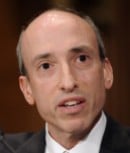
“The CFTC’s Whistleblower Office, which the agency implemented under the Dodd-Frank Act, provides the public an avenue to help catch misconduct in the markets and improve the CFTC’s ability to be an effective cop on the beat,” says CFTC Chairman Gary Gensler (pictured). “With Vincente’s valuable experience, the CFTC has a very capable hand leading this important office.”
The Whistleblower Office, created by section 748 of the Dodd-Frank Wall Street Reform and Consumer Protection Act (Dodd-Frank Act), establishes a
Advent Software’s Board of Directors has appointed Advent’s President Peter Hess (pictured) to the position of Chief Executive Officer (CEO) and President, effective 30 June, 2012. He will succeed Stephanie DiMarco, Advent’s founder and CEO, who is stepping down as CEO at the end of June 2012, but will continue to serve as a Director on Advent’s Board and will be transitioning to an advisory role for the company’s senior management.
Advent’s Chairman John H Scully says: "Stephanie DiMarco’s legacy at Advent and contributions to the investment management industry are extraordinary. Under Stephanie’s leadership, Advent has evolved from a one-product