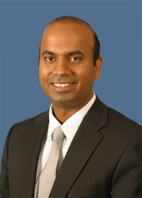
Philip Millward (pictured) and Julian Ashworth, a partner and associate respectively with Walkers’ private equity group in the Cayman Islands, argue that the environment is starting to look brighter for private equity, with fundraising becoming easier, dealmaking poised to rebound and exits becoming easier. But government tax and regulatory intervention remains a cloud on the horizon.
After 2009 ended up with the worst capital-raising environment for private equity for five years, along with a relatively sluggish buyout market, perhaps the best news for the industry is that things surely couldn’t get any worse.
Some promising signs at the start of
Ipreo, a provider of market intelligence and productivity solutions to investment banks and corporations, has acquired Markit’s certificates collection service.
As a result of this acquisition, Ipreo is launching a new offering called iCompliance.
It consists of an online library of US compliance-related certificates, including QIB, Finra 5130, and Regulation S Certificates. The library covers both equity- and debt-related certificates for both primary issuance and secondary trading.
The iCompliance library will be integrated into Ipreo’s sell-side solutions, including the equity and fixed-income bookbuild applications, as well as BD Advanced and BD Vision – prospecting and CRM applications that house Ipreo’s
Insynergy Investment Management has teamed up with India’s largest asset management company, Reliance Capital Asset Management, to launch its Absolute India Fund.
The news follows the launch last week of the Insynergy Absolute China Fund, which brings access to the long/short skills of GAM’s Michael Lai.
The Absolute India Fund, which will launch in mid-April, is a Dublin-domiciled Ucits III offering GBP and USD classes.
It will typically hold 20 to 60 positions in total, including 20 to 50 stocks in a long portfolio and zero to 15 stocks in a short portfolio.
Reliance Asset Management (Singapore) will assume the
Kinetic Partners has welcomed the results of a survey by the UK Financial Services Authority which found that hedge funds do not pose a potentially destabilising credit counterparty risk across the surveyed banks.
The survey also found that there is a relatively low level of leverage under the FSA’s various measures across the 50 hedge funds surveyed.
Kinetic says this demonstrates that hedge funds are generally not exposed to any more risk than a fund managed by the traditional sector. It believes that it is inappropriate for members of the EU to single out hedge funds as being responsible for
Kommera Chakradhar (KC) Reddy (pictured), Head of India Equities at Baring Asset Management Limited (London) summarises the impact of India’s latest Budget.
The surcharge on India’s corporate and personal income taxes was reduced to 7.5% from 10%. While this is not a huge tax cut, it is the first corporate tax reduction in six years.
Having seen stealth tax increases almost every year since 2004, their absence this year has been noted and welcomed. This signals that, for now, the government is keen to adopt a more market and economy-friendly posture.
However, this reduction in tax was funded by an
The International Organization of Securities Commissions’ Technical Committee has published details of an agreed template for the global collection of hedge fund information which it believes will assist in assessing possible systemic risks arising from the sector.
The template was developed by the Task Force on Unregulated Entities following requests from the Financial Stability Board as well as from Iosco members.
The purpose of the template is to enable the collection and exchange of consistent and comparable data amongst regulators and other competent authorities for the purpose of facilitating international supervisory cooperation in identifying possible systemic risks in this sector.
GlobeOp Financial Services has partnered with Linedata Services to offer an ASP-delivered, front-office order management system fully integrated with GlobeOp’s middle- and back-office services.
Time to market is reduced for start-up long/short equity managers and commodity trading advisers. Both new and existing hedge funds can reduce overall technology investment.
"With the surge in capital raising and new opportunities for hedge funds, we see managers demanding a scaled alternative similar to solutions that GlobeOp has already developed for complex products," says Ron Tannenbaum, GlobeOp managing director.
The GlobeOp-hosted service combines technology and functionality in a turnkey package. Key elements include pre-trade
Saka Capital, a Singapore-based credit hedge fund manager, has appointed Carne Global Financial Services to provide the Saka Capital Liquid Credit Fund with directorship services.
Peter Heaps (pictured), managing director of Carne Cayman Islands, has been appointed non-executive director on the board of the fund.
Heaps is a member of Carne’s independent directorship panel, which was launched in November 2007 and now supplies directors in Cayman, Dublin, Luxemburg, Switzerland and Dubai.
The Saka Capital Liquid Credit Fund, a Cayman Islands fund, seeks to take advantage of trading opportunities in credit markets with a geographic focus in Asia. The fund
The European Life Settlement Association has welcomed the frank address given by the UK Financial Services Authority at the Elsa/Lisa European Life Settlement Trade Mission in London.
At the centre of the regulator’s comment was some concern relating to disclosure and the quality of marketing materials relating to traded life policy investments – the FSA’s collective term for products that invest in traded life policies, senior life settlements or viatical settlements.
The FSA suggests that much more detailed and prominent risk warnings should be carried within providers’ literature, accompanied with illustrations as to the conditions under which a product will
By Leigh Skene, Lombard Street Research – The two factors that turned the 1930s into the worst depression since the Industrial Revolution were the collapse of the payments system and the global run on banks. Neither is likely this time.
The US has failed to maintain the dollar as a store of value, abrogating its responsibility as the agent of the reserve currency. However, the international payments system has already adjusted and so won’t collapse as it did in the 1930s. In addition, fiat money eliminated the ability to withdraw reserves from banks and deposit insurance has guaranteed the safety