Solutions
Over recent years, the continued popularity of passive funds has been a key factor in why hedge fund managers have seen their margins shrink, not to mention the increased costs of regulatory compliance. Many are looking to technology to improve their operational efficiency and for third party vendors to simplify things for them.
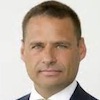
“To help control fees, hedge fund managers are outsourcing non-core functions, including the risk services; not risk management, but the risk calculation engines,” says Jason Connelly (pictured), Managing Director, Business Strategy & Execution, Axioma. Connelly formerly worked at D E Shaw and MSCI Analytics, where he ran the global
By Mike Canni, Opus Fund Services – Innovations such as self-driving cars and voice activated assistants, for example Amazon’s Alexa or Apple’s Siri, are increasingly becoming the new norm. “Smart Automation” is increasingly becoming the focus for the technology industry. As society evolves to understand and accept these changes, it’s important to understand that “Smart Automation” is very different than simple “Automation”.
Smart Automation combines a deep understanding of workflow with robust granular data to allow highly efficient, accurate, and controlled decisions to be made. For example, “Automation” is represented by the standard cruise control that maintains a car’s speed.
One of the clearest manifestations of how fund managers have changed the way they work in recent times lies in mobility. A portfolio manager today is equally effective working from a sun lounger on vacation, or from the home office during inclement weather, as he is working in the office. But it’s only thanks to technology innovation, driven in part by the tremendous advances made in cloud architecture, that this has been made possible.
Moreover, as managers grow they open offices in new geographies, which can place pressure on data management and file sharing; this takes up precious time and
Alternative data will likely transform active investment management over the next five years, according to a white paper by Deloitte. Those firms that do not update their investment processes within that timeframe could, they argue, face strategic risks. Alternative data is a wide term that spans multiple categories. In brief, it refers to any non-traditional data (ie market price data, trade volume data) and includes online search data, trade data, satellite and weather data, consumer transaction data, geo-location data, etc.
“The amount of data is growing exponentially. IDC said that there were 16.3 zettabytes of information generated in 2017 alone

Technology is becoming an important factor when hedge fund managers present their investment strategy to prospective investors. The more agile and sophisticated the technology infrastructure, the more appealing the manager will likely appear. And whereas in times past it would have been too much of a capital expenditure to spend big on IT and keep pace with larger hedge fund shops, technology firms like Eze Software are helping to level the playing field.
“The key for us is to make sure we apply technology to the real problems our clients have or anticipate they will have,” says Bill Neuman (pictured),
The flexible deployment of technology using cloud-delivered solutions and hosted services is, in many ways, levelling the playing field with asset management. Historically, using the best systems in large, sophisticated IT architectures to support complex trading strategies was the preserve of the biggest managers.
But in many ways, the rapid evolution of cloud technology has revolutionised what is now possible, with smaller managers equally able to avail of industrial-strength technology without having to worry about how to pay for it all. Advances in cloud delivery access and security are giving asset managers, regardless of size, the opportunity to leverage the
Technology innovation continues to develop at an astonishing pace. And for those hedge fund managers in active fund raising mode, the ability to demonstrate superior reporting, data management, and performance attribution skills with the latest technologies is becoming a serious point of differentiation.
As a recent SEI article1 suggested, not a day goes by where the impact of platforms like Amazon, Facebook, etc, isn’t felt by those in the asset management industry. The fact is, investor habits are rapidly changing and the way they choose to invest is beginning to mirror the way they use technology to support all other
New Switzerland-based index provider LIMEYARD has launched its Crypto Asset Index, together with Decentriq, a FinTech enabling financial institution, to benefit from distributed ledger technology based in the Swiss crypto valley.
LIMEYARD writes that the LIMEYARD Crypto Asset Index (LYCAI) has been designed to represent the cryptocurrency market while addressing regulatory and compliance related concerns.
The Index has been licensed to be used as benchmark for the Blockchain Technologies Note (DE000A19VT92), listed on the Frankfurt Stock Exchange. It is available for licensing by other financial products.
Stefan Deml, Founder and CTO of Decentriq, says: “We’re delighted to join forces with
Saxo Bank, a fintech specialist focused on multi-asset trading and investing, has added China A-shares to its global multi-asset offering.
Saxo Bank clients are able to trade A-shares listed on the Shanghai and Shenzhen stock exchanges. Access will be enabled via the Hong Kong Stock Connect link, a collaboration between the Hong Kong, Shanghai and Shenzhen Stock Exchanges, which allows international and Mainland Chinese investors to trade securities in each other’s markets. The offering will be available in all Saxo Bank’s markets, apart from the UK and Japan, which will see a roll out at a later stage.
Chinese
CoInvestor, a platform that digitises alternative asset transactions for advisers, fund managers, and private investors, has integrated its technology with financial advice back-office software supplier Intelliflo’s ‘Intelligent Office’ (iO), to deliver an upgraded service to customers.
CoInvestor is now available to iO users via Intelliflo’s app store and for the first time allows financial advisers using Intelligent Office to allocate and manage their clients tax-efficient investments within their existing back office. The CoInvestor integration will help to deliver and receive updates directly from fund managers, such as dividends, valuation updates and exits.
Since its inception in 2004, Intelliflo has