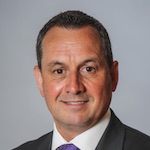
The recent event at Malta House on 11 June 2015, hosted by the Malta Business Network proved to be a great networking opportunity for its attendees. Not to mention the chance to speak up close and personal to Professor Joseph Bannister (pictured), Chairman of the Malta Financial Services Authority (MFSA), the island’s financial regulator.
The event was organised by Derek Adler, ACSI, a director and founder member of International Financial Administration Group (‘ifina’) – a firm that provides turnkey fund services to managers via its Primary European Fund SICAV.
Reflecting on the event, Adler comments: “I am so pleased that
How ICAP’s EBS BrokerTec’s central limit order book for spot FX managed the SNB’s CHF de-peg…
The decision by the Swiss National Bank (SNB) on 15 January 2015 to de-peg the Swiss franc from the euro sent the markets into turmoil and left a trail of casualties. Within a twenty-minute period, between 9.30am and 9.50am UK time, the CHF went into hyper drive, appreciating almost 30 per cent as it pulled away from its three-year peg at 1.20 francs per euro to reach 0.85 before falling back close to parity.
There are many reasons why the SNB decided to take
It was once widely believed that zero was the lowest interest rate possible. On face of it, it’s not obvious why anyone would pay to lend someone money. However, despite how counterintuitive they may be, negative interest rates are real.
Since 2014, the European Central Bank has elected to set the Deposit Facility Rate (DFR) lower than zero in – what some may say – is a desperate attempt to stimulate activity. Since then, the finance industry at large has grappled with finding viable ways of dealing with this counterintuitive concept. In many cases, firms have written code under the
As banks like JP Morgan pull the plug on supporting ‘mini prime’ clients, introducing brokers that operate a multi-clearing service model look set to benefit.
The decision three months ago by JP Morgan’s prime brokerage business to cut lose its clearing and financing arrangements to hedge funds working with introducing brokers (‘IBs’) could have serious repercussions.
Introducing brokers that have only one or two clearing arrangements in place face uncertain times, not to mention emerging managers who rely on IBs as an essential middleman to provide crucial services. This is because they lack the size to warrant a tier-one prime
As the costs of doing business have increased, more and more hedge fund managers are adopting the cloud; this has revolutionised the way all businesses operate, not just hedge funds.
But as technology improves and brings greater operational efficiency and data management capabilities to hedge funders, they are having to walk a tight line between bolstering security on the one hand, and justifying the costs on the other.
The arrival of cheaper and faster bandwidth means that everyone is always connected and as Andrew Flatt, CTO at Omni Partners LLP, a London-based hedge fund manager comments, “we are all ‘always-on’.”
International law firm Simmons & Simmons has unveiled the first dedicated online resource for start-up hedge fund managers, LaunchPlus, which supports emerging managers in the launch and operation of a new hedge fund management business.
The resource has been created by a dedicated team within the firm’s award-winning hedge fund practice.
Richard Perry, head of the firm’s Financial Services group, says: “We have designed this resource to help today’s emerging investment managers tackle the considerable number of decision points and workstreams involved in setting up from scratch. Simmons & Simmons LaunchPlus provides essential resources to help start-up managers get
Over the last 15 years the fund administration industry has been dominated by the big banking behemoths at one end of the scale and small niche players at the other.
Gradually, some of those smaller entities have been consumed.
Yet at the same time, those operating in the middle tier of fund administration – those in the USD10 – USD100 billion AuA range for example – have grown organically and taken away some of the size advantage of the bank-owned administrators; remaining flexible, innovative, and able to adapt responsively to managers' ever-changing needs.
"In today's marketplace, you don't have to
Focusing on bank-owned administrators, nobody knows the precise reasons as to why investment banks have been vacating the hedge fund administration space other than the banks themselves. One possible explanation is that the integrated model they have been running for years perhaps no longer aligns well enough with both clients and the ever-changing market regulations.
At the start of the century, investment banks were ideally positioned to build out fund administration as part of a bundled service including prime brokerage, research, execution and clearing, custody services and so on. Since then the risks to running a fund administration business have
In a report published by eVestment last March (Alternative Fund Administrator Survey 2014), 95 per cent of respondents answered `yes' when asked if mergers and acquisitions were expected to play a role in the hedge fund administration over the next few years, citing the desire for economies of scale as the most likely driver of future deals.
"We agree with the eVestment findings. This is absolutely a scale game. Think how much regulation is being thrown at the funds themselves, the governance structure around those funds, the reporting requirements, compliance overlay. This is an expensive business to be in, and
U.S. Bancorp Fund Services LLC (USBFS) is finalising two significant integrations: AIS Fund Administration, which it acquired in 2012; and Dublin-based Quintillion Ltd, acquired in 2013. The two transactions combined added approximately USD43 billion in AuA to their existing business along with several organic growth opportunities.
“Our alternative investment fund AuA is approximately USD120 billion right now. Although not included in that AuA number, it’s worth noting that we are one of the leaders in administering liquid alternative mutual funds. There are approximately 500 liquid alternative funds and we are the full service provider to 150 of them,” comments Joe