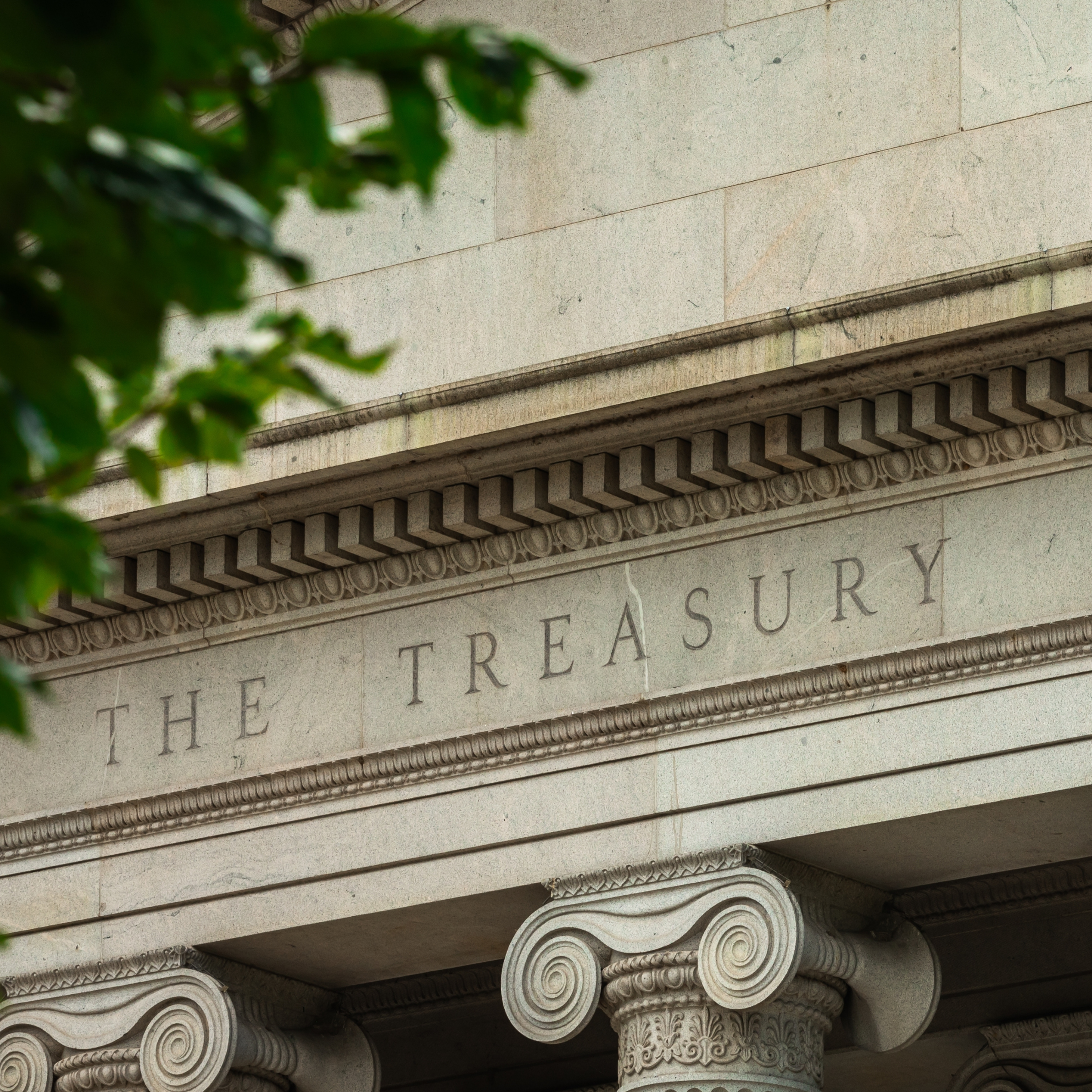
US Treasuries rallied across the curve on Monday as easing geopolitical tensions in the Middle East prompted investors to scale back expectations for further Federal Reserve rate increases, according to a report by Bloomberg.
Bond markets reacted positively after the US and Iran announced an agreement aimed at ending hostilities and reopening the Strait of Hormuz, a critical shipping route that carries roughly one-fifth of global oil supplies.
The prospect of renewed energy flows sent Brent crude prices down more than 4%, reducing inflation concerns and boosting demand for government bonds.
Shorter-dated Treasuries, which are particularly sensitive to shifts in monetary policy expectations, led the rally. Traders in interest-rate swaps now assign roughly a 60% probability of a quarter-point Federal Reserve rate increase by December, down from around 80% at the end of last week.
Yields on two-year Treasuries fell six basis points to approximately 4.02%, while benchmark 10-year yields declined five basis points to 4.43%. Thirty-year bond yields also dropped to their lowest level in more than a month.
Market participants said lower oil prices could provide central banks with greater flexibility to pause and assess the economic impact of recent geopolitical events.
Matthew Haupt, portfolio manager at Wilson Asset Management, said some investors are unwinding bearish positions in bond markets as inflation risks recede.
The implications extend well beyond the US bond market. Treasury yields serve as a benchmark for global borrowing costs, influencing valuations across corporate debt, equities and emerging-market assets.
Strategists also highlighted the historical relationship between energy prices and bond yields. Tomo Kinoshita, global market strategist at Invesco Asset Management Japan, said previous market patterns suggest a sharp decline in oil prices could translate into lower long-term Treasury yields.
The rally extended across Asia-Pacific fixed-income markets. Yields on Australian, New Zealand and Japanese government bonds all moved lower as investors reassessed the inflation outlook following the agreement.
Despite the improved sentiment, investors remain cautious over whether the deal will hold. Washington and Tehran offered differing interpretations of elements of the agreement shortly after its announcement, underlining the complexity of negotiations surrounding Iran’s nuclear programme.
Andrew Ticehurst, a strategist at Nomura, warned that uncertainty remains until the Strait of Hormuz formally reopens later this week, while developments elsewhere in the region could still influence market sentiment.
Attention is also turning to this week’s Federal Reserve meeting, where policymakers are widely expected to leave benchmark interest rates unchanged at 3.5% to 3.75%.
Tai Hui, chief market strategist for Asia Pacific at JPMorgan Asset Management, said the easing in energy-related risks may strengthen the case for the central bank to remain on hold while assessing the broader economic impact of recent events.
For investors, the Iran agreement has reduced one of the market’s most significant near-term inflation risks, though lingering geopolitical uncertainty suggests volatility may remain elevated.