The Hennessee Hedge Fund Index advanced 0.96 per cent in February, bringing its year-to-date performance to 0.42 per cent.
The S&P 500 increased 2.85 per cent in February (-0.95 per cent YTD), while the Dow Jones Industrial Average advanced 2.56 per cent (-0.99 per cent YTD) and the Nasdaq Composite Index advanced 4.23 per cent (-1.36 per cent YTD).
Bonds rallied with the Barclays Aggregate Bond Index increasing by 0.37 per cent (+1.91 per cent YTD).
“Global equity markets were mixed in February, with the US experiencing gains and most international markets posting small losses. During the month, the focus
Steel Partners Japan Strategic Fund (Offshore) has commenced a proxy solicitation campaign seeking support for the election of its slate of ten director-nominees to the board of directors of Sapporo Holdings.
Steel Partners is seeking the support of Sapporo shareholders for Steel Partners’ six director-nominees and four incumbent directors whom Steel Partners supports for re-election to the board at the 2010 AGM.
“We believe that electing the shareholder nominees and the independent nominees will maintain continuity on the board while also bringing about the leadership change necessary to revitalise Sapporo, to refresh Sapporo’s leadership and to increase Sapporo’s long-term corporate
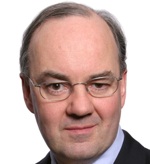
Ronald Paterson (pictured), partner at international law firm Eversheds, comments on the latest stage of the countdown to the Alternative Investment Fund Management (AIFM) directive.
British diplomats have this week begun the final stage in attempting to secure concessions to the Alternative Investment Fund Management (AIFM) directive, which critics warn could drive London-based hedge funds and private equity firms out of business.
To achieve a blocking minority in the Council where voting is on a qualified majority basis and each Member State’s vote is weighted in proportion to its population, the UK needs support from at least three other
SEI has been selected by AlphaOne Capital Partners to provide a complete outsourcing solution, including middle and back office services, for the firm’s portfolio of investment products.
AlphaOne, an equity money management firm founded by former Gartmore chief executive Paul J. Hondros, sought to outsource their back and middle office functions as a means of achieving greater infrastructure transparency, flexibility and scalability without tying up critical internal resources.
Under the agreement, SEI will provide AlphaOne with a full range of services for its institutional and hedge fund accounts, including trade processing, investment accounting, daily cash and position reconciliations with custodians,
The value of investment funds in Guernsey increased by GBP2.7bn, or 1.5 per cent, during the final three months of last year.
The second successive quarter of growth takes the total value of funds business in the Island to GBP184.2bn at the end of December 2009.
However, over the full calendar year this is a decline of GBP16.2bn (8.1 per cent) from the end of December 2008.
“We can continue to be cautiously optimistic about our funds sector,” says Peter Niven, chief executive of Guernsey Finance.
“Although we have seen overall business decline by some eight per cent during the
Auriel Capital, an asset management firm specialising in absolute return strategies, is launching a market neutral fund called Auriel UK Equity Fund.
The new hedge fund comprises both long and short investments in FTSE 100 companies.
The fund complements Auriel Capital’s existing European equity market neutral strategy, which has generated annualised returns of 8.5 per cent since its inception in June 2007.
The Auriel UK Equity Fund’s strategy involves trading the most liquid shares in the UK market. The objective is to generate absolute returns by managing a diversified, risk-controlled portfolio with low correlation to traditional asset classes and
Oakley Alternative Investment Management has appointed hedge fund investor Teun Johnston as a portfolio manager.
Johnston was previously co-head of investments at Amundi AI, formerly known as Credit Agricole Asset Management Alternative Investments.
At Oakley, Johnston will work together with Nick Hannan, chief investment officer, and Christopher Parkinson, portfolio manager, to develop the scope of the Oakley investment function and business.
Johnston joined Amundi AI in December 2000, initially as a senior investment analyst focusing on the initial and ongoing due diligence of European and Asian-based hedge fund managers. He was appointed co-head of investments in 2009 and had been
Edelgard Beister, director of Vega Asset Management Holdings, has reported improvement across all Vega’s funds in February 2010.
The net returns for February 2010 are as follows: Vega Global: 1.14 per cent (year to date: 2.95 per cent); Vega Select Opportunities A Class: 0.78 per cent (year to date: 10.87 per cent ); A1 Class: 0.63 per cent (year to sate: 9.13 per cent); Vega Feeder Fund 2X Class (providing 2X leveraged investment into Vega Global): 2.23 per cent (year to date: 5.85 per cent); Vega Credit Opportunities: 3.45 per cent (year to date: 6.78 per cent).
In a
Derivatives exchange Eurex has admitted the first broker headquartered in the People’s Republic of China through its Hong Kong subsidiary.
GF Futures (Hong Kong) became a trading member of Eurex on 3 March 2010.
Dr. Cheng Xiao, the general manager of GF Futures, says: “We are honoured to be the first Chinese broker as a member of Eurex. We will have a better understanding of the European market together with our customers. Being a member of Eurex represents another major step to offer access to international business opportunities to our customers as well as a further commitment to the internationalisation
Third Eye Capital, an investor in Canadian private credit, has appointed Christopher Vokes as vice president, investor relations.
Vokes is a seasoned marketing professional with experience in both the institutional and retail investment markets.
In the newly-created role, Vokes will oversee all of the investor relations and marketing activities of the firm across both retail and insitutional platforms.
He will be responsible for implementing TEC’s new domestic fund partnership and growing the offshore fund’s assets.
Prior to joining TEC, Vokes held senior marketing roles at various hedge funds and investment firms, and established and helped grow the Western Canada