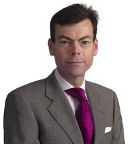
Offshore law firm Ogier is to offer Guernsey and Jersey legal and fiduciary services in Asia.
In May, Guernsey and Jersey lawyers will be relocating to the firm’s Hong Kong office, where the firm has an established BVI and Cayman legal practice.
This latest move comes in response to increased client demand for Guernsey and Jersey legal and fiduciary services in the Asian time zone.
It will be the first time that Guernsey and Jersey lawyers will operate in this region.
Marcus Leese (pictured), a partner based in the Ogier Guernsey office, will head up the new Guernsey and
Blacksquare Capital and Investment Fund Services Limited have launched the IFSL Blacksquare Multi-Manager Absolute Return Fund of Funds, which will start trading on 1 February 2010.
The fund’s objective is to deliver positive absolute returns which are uncorrelated to stock and bond markets throughout all market conditions.
The target portfolio will have an exposure to a range of funds which combine different trading strategies and trade throughout global stock, bond, currency and commodity markets.
It will include managers such as Blackrock, Bluecrest, Brevan Howard, Gartmore, JP Morgan and Threadneedle.
Madilean Coen, partner at Blacksquare Capital, says: “The IFSL Blacksquare Multi-Manager
The US Commodity Futures Trading Commission has issued an order filing and settling charges against Scotia Capital for pre-arranging trades in the natural gas futures contract on the New York Mercantile Exchange during November and December 2006.
The CFTC order imposes a USD250,000 civil monetary penalty on Scotia Capital, an investment dealer in Toronto, Canada and a wholly owned subsidiary of The Bank of Nova Scotia.
Additionally, Scotia Capital was ordered to cease and desist from future violations of the Commodity Exchange Act.
On one or more occasions in November and December 2006, Scotia Capital pre-arranged natural gas futures trades
Jarvis & Mackenzie has launched a commodity investment fund, the J&M CIF, which aims to offer high net worth investors portfolio diversification in the commodities arena.
The J&M CIF comprises of an index of commodities which represent an unleveraged, long-only investment in a basket of commodity futures.
The fund offers clients direct access and exposure to the main five commodity sectors: energy, precious metals, industrial metals, livestock and agriculture. It will have a pre-determined proportional holding in a range of commodities traded within each of these sectors.
“The funds versatility and adaptability is phenomenal and it has been proven that
Asset manager Union Bancaire Privée made a net profit of CHF216m (USD209m) for the 2009 financial year.
Assets under management totalled CHF75bn (USD72bn) as at 31 December 2009, against CHF100bn (USD95bn) at the end of 2008, as a result of the contraction in the institutional and alternative asset management industries and the adverse effects of exchange rates.
These results were partially offset by the CHF6.7bn (USD6.5bn) in net capital inflows from private clients, with a significant proportion from emerging markets.
“Our ability to adapt has allowed us to maintain our profit margins in markets that remain unstable,” says Guy de
Florian de Sigy, former head of structured equity sales for Europe at Deutsche Bank, and Javier Rodriguez, previously senior strategist and head of strategic accounts at Barclays Global Investors’ client solutions group, have founded Gamma Finance.
The firm, which was recently granted Financial Services Authority approval, provides investors with services in the alternative investment space.
Through its client network, Gamma Finance facilitates and sources secondary market transactions on illiquid hedge funds.
“The opportunity is clear. Large numbers of funds have been gated and also side-pockets have been created over the last two years,” says de Sigy (pictured). “This process has
Paddock Fund Administration has gone live with IGEFI Group’s MultiFonds fund accounting platform.
Paddock specialises in fund administration, transfer agency, client communication and domiciliation.
It acts as an independent partner with PSF status, servicing international clients as central administrator for investment funds with a focus on specialised investment funds domiciled in Luxemburg.
IGEFI Group is a provider of software solutions for international fund distributors, third party investment fund service providers, and fund managers.
IGEFI’s core platform, MultiFonds, helps companies in the investment fund industry to grow their business while improving client service levels and efficiency. MultiFonds is operational in more