Solutions
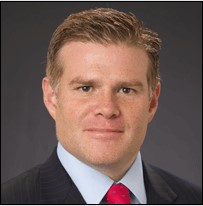
The Maples Group has appointed Hugo Lodge as a partner in its Regulatory & Compliance legal practice.
Lodge joins the Group’s Cayman Islands office from the UK Financial Conduct Authority, where he led the new team responsible for the oversight of AML supervision in the UK legal sector, prior to which he worked in the Retail Banking, Enforcement and Market Oversight division. Lodge was called to the Bar in England and Wales in 1998 and practised as a barrister at 7BR in London where he specialised in financial crime and regulation.
Global Managing Partner, Alasdair Robertson, says: “We
Fenergo, a provider of digital Client Lifecycle Management (CLM) software solutions for financial institutions, has launched Rules as a Service (RaaS), a cloud-based regulatory rules offering.
The ‘plug and play’ solution is designed to enable financial institutions to easily integrate Fenergo’s regulatory rules capabilities into their existing digital platforms.
Fenergo’s Rules as a Service is available as an on-demand repository of local and global rules for financial institutions seeking a digital solution for their Know your Customer (KYC), Anti Money Laundering (AML) and regulatory requirements across all jurisdictions. This solution, also available on-premise, allows financial firms to focus on
QuantHouse, an independent global provider of end-to-end systematic trading solutions including market data services, algo trading platform and infrastructure solutions, has launched direct access to the Fenics USTreasuries (Fenics UST) platform through the FeedOS API and QuantLINK global network.
Fenics UST is a fully electronic US Government securities trading venue owned and operated by BGC Financial. Fenics UST provides buy-side participants with access to cash treasuries via two electronic marketplaces: a Central Limit Order Book designed for low latency quantitative and systematic traders and a ‘Block Book’ designed for large institutional investors. Operating 23 hours a day, the Fenics UST platform
Ethernet network, cloud and hosting provider BSO is partnering with Stake Capital, an emerging leader in the staking services market, to provide highly secure and available investor delegation services.
Using BSO’s global server infrastructure, Stake Capital is providing delegation services for blockchain-based proof-of-stake networks which offer a new opportunity for investors to use cryptocurrency capital and receive interest on investments, by allowing their tokens to be used to secure the network.
BSO is the first network provider to launch a crypto-friendly connectivity infrastructure, BSO Crypto Connect, for traders, exchanges, financial institutions, FinTech start-ups, and regulators looking to understand and
Q&A with Karl O’Reilly, Fund director at International Management Services Ltd (IMS)
Change is always happening and as we near the end of the current investment cycle the world is learning to deal with increased and persistent market volatility. With this market backdrop, the role of independent directors remains as important as ever. Institutional investors are taking a more proactive approach in reviewing the directors of hedge funds, so it is essential that investment managers take the appointment of directors seriously.
Karl O’Reilly, Fund Director at IMS, outlines some of the key considerations that investment managers should be discussing when
Fund administrators have, over the last decade, focused a lot of attention and marketing dollars to persuade clients to buy customised, premium value-add services, in a bid to stand out from the crowd. To some extent, this has been a period of seduction, driven in large part by the incredible sophistication and evolution of technology tools.
This has empowered fund administrators to ramp up their middle-office offerings and get closer to their clients. That is no bad thing, but according to Robin Bedford (pictured), CEO of Opus Fund Services (‘Opus’), all that most fund managers want is an accurate, timely,
Robotic process automation is accelerating productivity within the financial sector. Much of the recent progress that’s been made innovating artificial intelligence (AI) technology toward greater efficiency has been driven by the significant resource investments of fund administrators, such as U.S. Bank Global Fund Services.
“Since early 2013, our teams have worked tirelessly to be able to fully strike an automated NAV with zero human intervention,” says Christine Waldron (pictured), chief global strategy officer at U.S. Bank Global Fund Services. “We’re now able to deliver this NAV five days sooner than we were able to historically.”
Robotic intervention has produced significant
Despite the undoubted uptake in cloud platforms by global hedge funds over the last few years, with much written on the scalability and cost benefits, the perception remains that cloud usage invites data security risks. This is not market ignorance.
A cloud security report by Crowd Research Partners1 found that 91 per cent of cybersecurity professionals share such concerns. In its “Navigating a cloudy sky” report, McAfee2 noted that approximately 25 per cent of public cloud users have suffered data loss.
Hedge funds have to balance private versus public cloud usage and remain confident at all times that their data is going
The amount of data is exponentially growing. A paper by IDC, Data Age 2025, said that 16.3 zettabytes of information was generated in 2017 (one zettabyte is 1 billion terabytes), and forecasted this amount would rise to as much as 163 zettabytes in 2025.
Making sense of all this data has become the next arms race, with artificial intelligence playing a pivotal role in pattern recognition and generating new insights for managers.
This is certainly true when one considers the new generation of hedge funds that are using autonomous learning and neural networks to run their portfolios. These funds ingest
In 2018, there were over 1200 publicly disclosed security breaches globally with the number of exposed records more than doubling from 197.6 million in 2017 to 446.5 million last year* as reported by Fortune. The number and scale of attacks has been rising year on year for the past decade and with general data protection regulation (GDPR) now in force in Europe, the number of reported breaches is likely to continue rising.
With the cloud environment becoming a ubiquitous feature of the fund management industry as managers seek to benefit from scale and efficiency gains, the migration into cyberspace