Established in 1984, multi-strategy alternative investment manager and opportunistic credit investor Corbin Capital Partners today manages more than USD9 billion in assets across a broad range of commingled and bespoke portfolios.
Corbin invests across both corporate and structured credit, the latter spanning equity and mezzanine tranches of collateralised loan obligations, and residential and commercial mortgage-backed securities, among others.
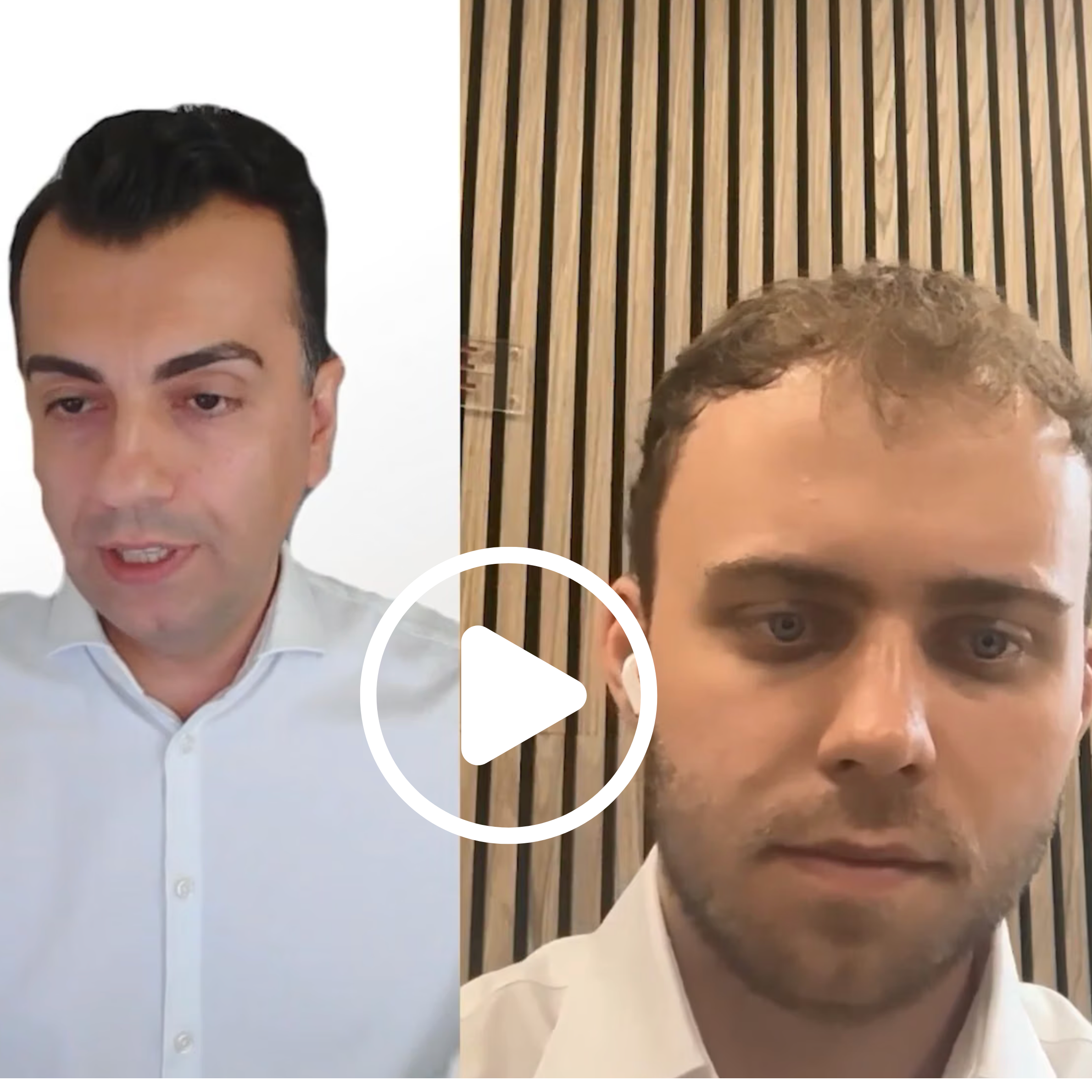
“We partner and deploy capital in a lot of different ways – in CUSIP markets, both structured and corporate traded markets, including in RMBS, CMBS, in CLO equity and mezzanine,” Craig Bergstrom (pictured), Corbin’s chief investment officer, tells Hedgeweek.
About USD2.7 billion
Sycamore Tree Capital Partners (Sycamore Tree), a specialist asset manager with private and alternative credit investment expertise, has appointed Paul Travers as a Managing Director and Portfolio Manager, effective 9 September, 2021.
Hedge funds betting against easyJet saw their short positions boosted on Thursday as the low-cost airline’s share price took a sharp nosedive after it rejected a takeover bid.
With the recent arrival of experienced antitrust and M&A lawyer Miguel Vaz, European law firm Fieldfisher is now providing a “one-stop-shop” service to a number of top tier investors and hedge funds, focused on risk-adjusted merger arbitrage investment opportunities.
“Merger arbitrage investors need to understand the antitrust and other regulatory risks that may affect the outcome of M&A deals so they can make informed investment decisions,” says Vaz. “In this type of market, success is determined by identifying and assessing regulatory issues and other risk factors quickly, precisely and with access to quality information.”
Fieldfisher’s Merger Arbitrage team covers
Overbond has added a rich-cheap model to its suite of AI fixed income analytics, allowing buy-side desks around the globe to generate systematic return with a real-time, fully back-tested methodology that is part of a scalable and interoperable trading system.
CloudMargin, creator of a collateral and margin management solution native to the cloud, has made enhancements to facilitate clients’ preparedness for the Uncleared Margin Rules (UMR) for firms that have just fallen under the scope of Phase 5 or will fall under the scope of Phase 6 as of next September.
The firm is now connected to nearly 60 custodians globally for cash, securities and third-party SWIFT settlement, in addition to its long-established SWIFT connectivity to the four major triparty agents.
In January 2016, CloudMargin became the first collateral management technology provider to offer direct connectivity to SWIFT’s global
Hedge funds’ narrow rise during August has driven their year-to-date returns back into double-digit territory, as equity long/short, event driven, macro and relative value managers all scored gains in the face of the Afghanistan crisis, ongoing monetary policy uncertainty, and Covid’s continued impact on markets.
Hedge Fund Research’s main Fund Weighted Composite Index – a broad-based index tracking the monthly returns of some 1400 single manager hedge funds across all strategy types – rose 0.80 per cent last month.
August’s positive performance reversed July’s narrow 0.60 per cent loss, which had been the benchmark’s first down month since September 2020.
Axyon AI has partnered DMALINK to develop the use of deep learning artificial intelligence to dynamically manage liquidity, detect market and order anomalies, and create smart algorithms for trade execution in the fiat FX space.
Axyon AI will combine its technology with DMALINK’s ECN infrastructure to innovate FX trading. For the buy side, deep learning models considerably improve the quality of order fills. For the sell side, the application will ensure firms maintain a positive yield curve. The deep learning technology will also detect market anomalies in spot FX, giving DMALINK participants access to one of the most powerful risk
Diligend, a fund due diligence and monitoring software provider, has launched a new and free to use Form ADV data module.
ADV data plays an instrumental role in helping investors make investment decisions during the selection of fund managers or when monitoring their existing portfolio. The data covers important information such as assets under management (AUM) breakdown, ownership, clients, employees, business practices, affiliations, and any disciplinary events of the adviser or its employees.
The Diligend Form ADV data module is a complimentary service enabling investors and consultants to review and monitor the Form ADV information and changes of any
TORA, provider of a cloud-based order and execution management system (OEMS) and portfolio management system (PMS), has expanded its UK presence with a new London office and new hires Peter Rank and Chris Hopton.
Rank has been brought on as Sales Manager, Europe, and Hopton as a Professional Services Manager.
Rank joins TORA from AxeTrading and Bloomberg AIM where he worked with clients across Europe. Peter will be reporting to David Tattan, the Head of Sales for Europe, and is responsible for driving new client acquisition for TORA’s software solutions.
Prior to joining TORA, Hopton was a Senior